Weather and clothes
- There is no dry season. There are wetter and less wet months. May and June are statistically the driest and have the longest days; July and August are warmest and busiest.
- Four seasons in an afternoon is not a joke. Carry a waterproof shell every single day, regardless of forecast.
- It rarely gets very cold — winter lows around 3–7 °C in most of the country — but it is damp, and the wind on the west coast makes 10 °C feel considerably less.
- In June it is light until well past 10 pm. In December it is dark by 4.30 pm. Plan itineraries accordingly.
Money and payment
- The Republic uses the euro. Northern Ireland uses pounds sterling. You will cross between them with no border check whatsoever.
- Cards are accepted essentially everywhere, contactless included. Carry €30–50 in cash for small rural pubs, honesty boxes and the occasional car park.
- Tipping is modest and not obligatory. Restaurants: 10–15% if service is not already included. Taxis and drivers: rounding up is normal, 10% is generous. Nobody will be offended either way.
Getting around
- Distances are short; journeys are not. Ireland is smaller than Maine, but a 200-kilometre drive on rural roads takes far longer than the same distance elsewhere.
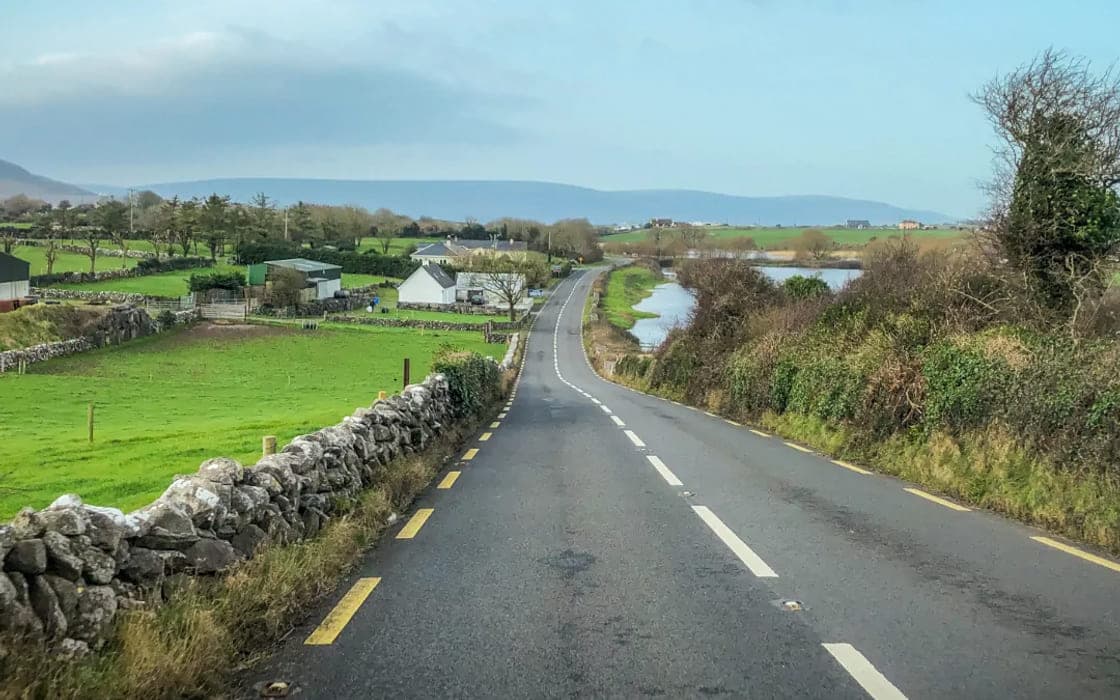
- Driving is on the left. If you have never done it, do not begin at 7 am after a transatlantic flight on a road with stone walls on both sides.
- Rental insurance excess in Ireland is unusually high and many non-EU credit-card policies specifically exclude the country. Check before you decline the extra cover.
- Motorway tolls are cash- or card-payable at barriers, except the M50 around Dublin, which is barrier-free and must be paid online by 8 pm the following day. Rental companies charge an administration fee if you forget.
- Trains radiate from Dublin and are good on those lines. Getting from, say, Galway to Killarney by public transport is genuinely difficult. See our comparison of the options.
Practicalities
- Plugs are Type G, three rectangular pins, same as the UK. 230 V. Bring an adapter.
- Emergency number is 112 or 999.
- Tap water is safe everywhere.
- Mobile coverage is good in towns and patchy in the west. Download offline maps before Connemara, the Burren or the Beara Peninsula.
Manners
- "How are you?" is a greeting, not a question. "Grand" is the answer, and it means anything from excellent to catastrophic.
- Pub rounds are a real institution. If you are in a group and someone buys you a drink, you are in the round. Buy one back.
- Conversation with strangers is normal and expected — in shops, in queues, at bars. It is not an attempt to sell you anything.
If your first day involves a long-haul arrival and a three-hour onward journey, consider not driving it. That is precisely what our fixed-price transfers exist for: someone meets you inside arrivals, takes the bags, and you look out of the window.